Silveira AC, Moura EP. Contributions of theatrical activities to medical education from the perspective of students and alumni: a qualitative study. Interface (Botucatu). 2026; 30: e250678 DOI: https://doi.org/10.1590/interface.250678
Abstract
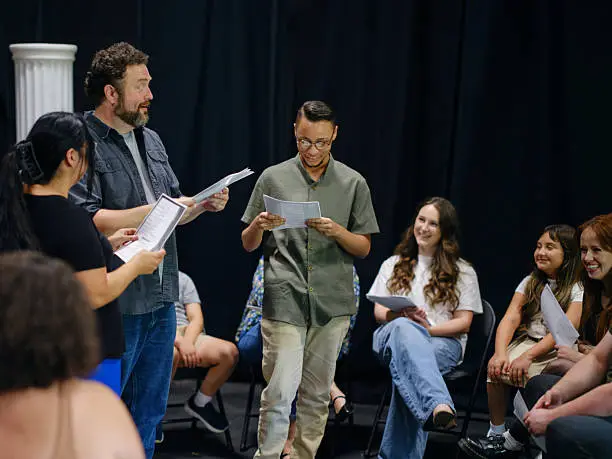
Contemporary medical education faces the challenge of integrating technical and humanistic competencies, overcoming the predominance of the traditional biomedical model. Among the practices that facilitate this integration, theater has proven to be a privileged space for developing sensitivity, ethical reflection, and relational skills. This qualitative study analyzed the experiences of 33 medical students and alumni participating in a university theater group, seeking to understand how this experience influences their personal, social, and professional trajectories. Semi-structured interviews conducted between January and February 2025 were examined through thematic content analysis, ensuring rigor by theoretical saturation and triangulation. Four interrelated formative areas emerged: personal transformations, relational competencies, professional impacts, and belonging. Theater proved to be an aesthetic-affective formative methodology, reinforcing the pertinence of artistic practices in medical education as strategies for comprehensive training and the humanization of care.
Keywords
Medical education; Theater; Empathy; Humanization of care; Professional training
Access in: https://doi.org/10.1590/interface.250678